Hiring
How to hire a product designer in Sydney
What a product designer actually does, where to find good ones in Sydney, and how to tell a great portfolio from a pretty one. A practical guide from a Sydney-based design director.
Hiring a product designer is one of the highest-leverage decisions a product team makes. Get it right and your product gets clearer, faster to build and easier to sell. Get it wrong and you end up with beautiful screens that don't move a single number. Here's how I'd approach it, written from the other side of the table. A quick note on bias: I'm a Sydney product designer myself, so read this as one practitioner's view.
What does a product designer actually do?
A product designer decides how a digital product should work, look and feel, and makes sure it solves a real problem for the people using it and for the business paying for it. Day to day, that means research and workshops, mapping user flows, wireframing, interface design, prototyping, testing with real users and working closely with engineers until it ships.
The title gets used loosely. Some people say product designer when they mean a UI designer who makes screens look polished. Others mean a strategist who rarely opens Figma. The people worth hiring can do both: frame the problem with your team, then craft the interface that solves it. If you're unsure how the roles differ, I've written a separate explainer on UX, UI and product design.
Freelancer, agency or in-house?
Before you look at a single portfolio, decide what kind of help you need. It changes where you look and how you pay.
| Freelancer | Agency | In-house | |
|---|---|---|---|
| Best for | A defined project, a redesign, a design system or extra hands in a crunch | Big launches that need strategy, design, content and engineering in one team | Products that will keep evolving for years |
| Speed to start | Fast, often within weeks | Slower, needs scoping and a proposal | Slowest, recruitment takes months |
| How you pay | Usually a day rate | Usually per project or per sprint | Salary plus overheads |
| Watch out for | Knowledge leaving when the engagement ends | Senior people pitching, junior people delivering | Hiring for a title instead of the skills you need |
A lot of my own work has been in agency teams embedded with clients. At R/GA, a six-person team spent eight months inside Telstra building its design system. That model works well when the client needs to keep the knowledge after the agency leaves.
Where to find product designers in Sydney
- Referrals. Ask engineers and product managers you trust who they loved working with. The best designers are often booked through word of mouth and rarely appear on job boards.
- LinkedIn. Search for product designer or design director with Sydney as the location, then go straight to the portfolio link. Skip the headline and look at the work.
- Dribbble and Behance. Good for gauging visual craft, but shots rarely show thinking. Use them to build a shortlist, not to decide.
- Design events. Conferences like UX Australia and local design meetups are where people who care about the craft spend their evenings.
- Agencies and studios. If you need a team rather than a person, Sydney has strong product and digital agencies. Ask who will actually do the work.
What separates the best product designers
Visual polish is the easiest thing to see in a portfolio and the least reliable thing to hire on by itself. These are the traits I'd look for, and the ones I hold myself to.
1. They find the real problem first
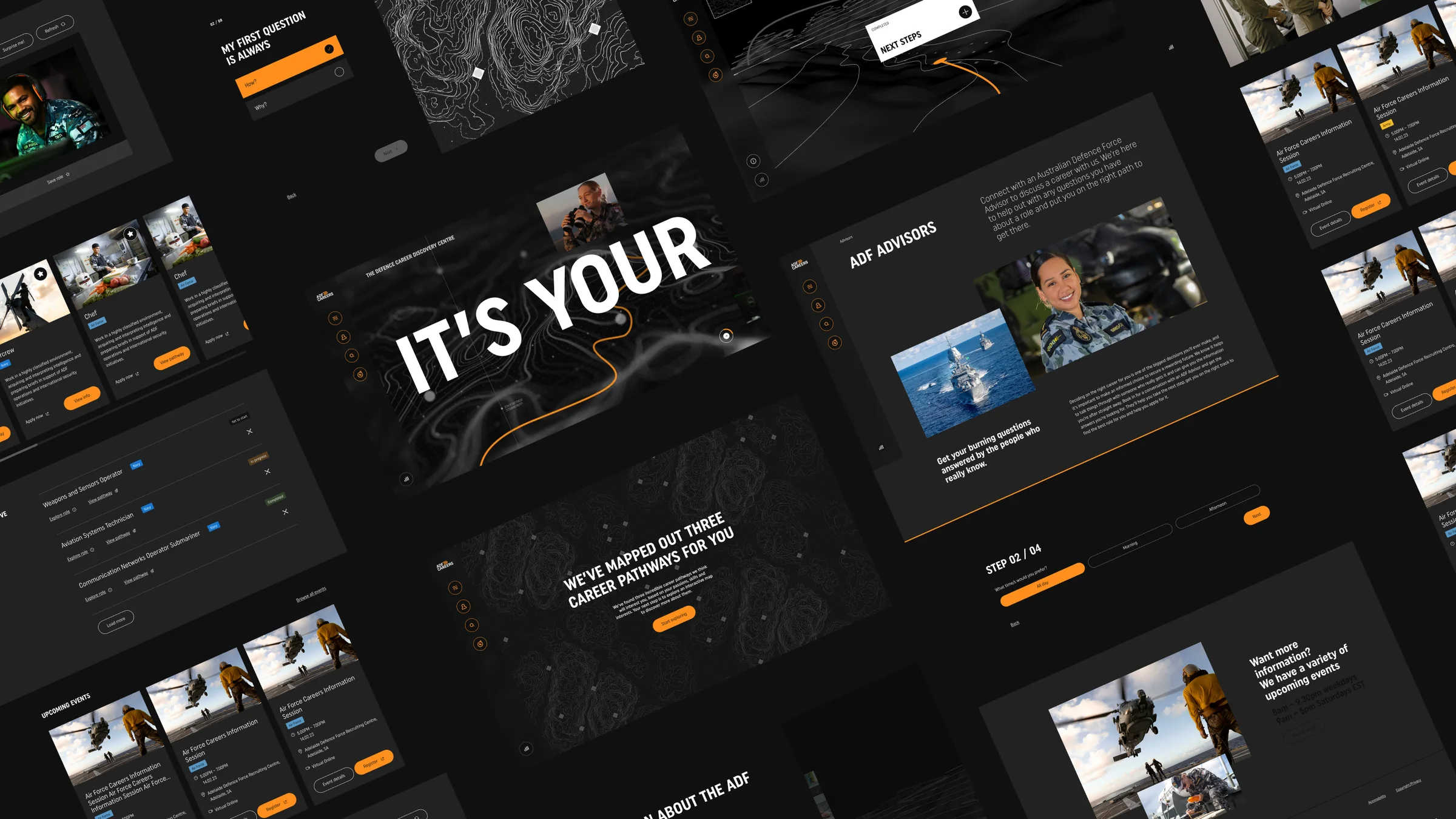
On the ADF Career Discovery Hub, the brief was about recruitment drop-off: around 70% of applications were abandoned each month. Focus groups and interviews with more than 60 prospects uncovered the deeper issue. Young people didn't yet know what drove them, so asking "what job do you want?" was the wrong question. The product was reshaped around self-discovery. Great designers push on the brief until they find that kind of insight.
2. They measure what happened
A strong designer can tell you what changed after launch. In Mox Bank's first year, 80% of customers were onboarded in as little as three minutes, and the app was rated 4.7 on the App Store, the highest of any Hong Kong virtual bank. Numbers like these show the design was judged on results, not taste.
Visual polish is the easiest thing to see in a portfolio and the least reliable thing to hire on by itself.
3. They think in systems
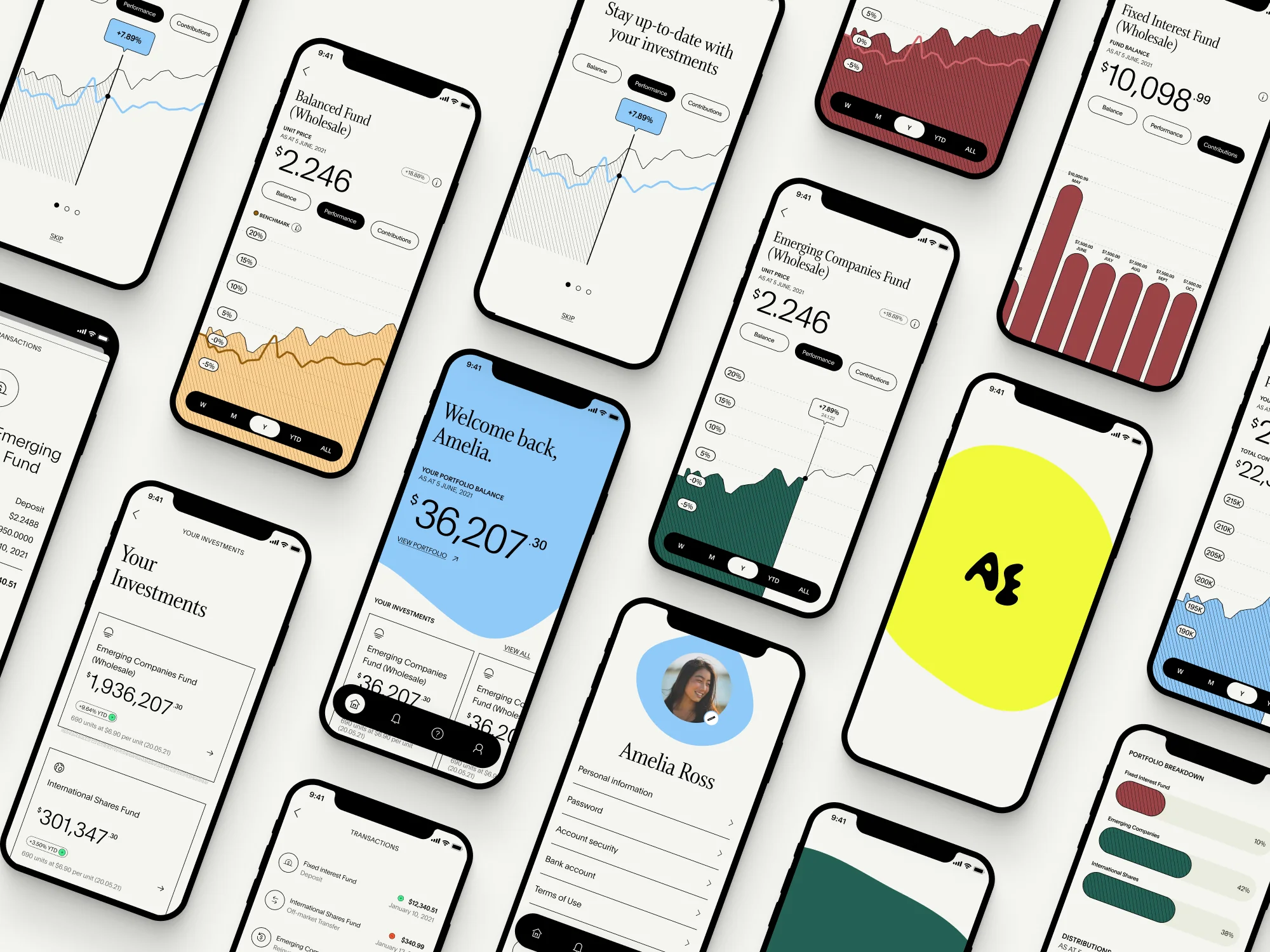
Products grow. Designers who build reusable components and clear guidelines save your team months later on. The Australian Ethical app was built on a design system of more than 100 components across 13 modules, so new features didn't start from scratch.
4. They're easy for engineers to work with
Ask how they hand over work. The best answers involve engineers early, shared component libraries and working prototypes, not a big reveal at the end.
5. They explain decisions simply
If a designer can't explain why a screen looks the way it does in plain language, your stakeholders won't be able to either.
How to read a portfolio in ten minutes
- Open two case studies, not the home page. That's where the thinking lives.
- Find the problem statement. If you can't tell what was broken, move on.
- Look for "my role". Good designers are specific about what they did versus what the team did.
- Look for the decisions in the middle: research, options explored, things that were tested and changed.
- Check the ending. Is there an outcome, a metric or at least a launch?
- Notice the site itself. Is it fast, easy to read on your phone and carefully made? It's a small product in its own right.
I've gone deeper on this in what the best product design portfolios have in common.
Questions to ask in the interview
- Walk me through a project where research changed your direction.
- What would you do differently on this project now?
- How did you work with engineers, and what got cut?
- How did you know the design worked after launch?
- How do you use AI tools in your process today?
That last one matters more every year. Good answers are specific about where AI speeds up the work and where human judgement still has to lead. Here's how I use AI in my own practice.
Red flags
- Every case study is a set of beautiful screens with no problem, role or result.
- Only concepts and unsolicited redesigns, with nothing shipped.
- They can't name a trade-off they made or a decision they'd change.
- They propose solutions before asking anything about your users.
Frequently asked questions
How much does a product designer cost in Sydney?
It depends on seniority and how you engage them. Freelancers usually quote a day rate, agencies usually quote per project or per sprint, and in-house salaries follow the market for senior tech roles. Ask for rates up front and compare on the outcomes each option can deliver, not just the price per day.
Should I give a product designer a design test?
A walkthrough of past work tells you more than unpaid spec work, and many experienced designers will decline unpaid tests. If you need to see how someone thinks on your problem, offer a short, paid exercise with a clear brief.
How long does it take to design an app?
It depends on scope. As a reference point, the Mox Bank team delivered 10 epics in four months working in two-week sprints. A focused MVP is usually a matter of months, not weeks, and a design system makes every release after that faster.
What's the difference between a product designer and a UX designer?
A UX designer focuses on how a product works: research, flows and usability. A product designer covers that too, plus the interface itself and the business outcomes the product needs to hit. The titles overlap a lot in practice, so judge people by their work.
Who are some product designers in Sydney?
Sydney has a strong design community across agencies, startups and large brands like the banks and telcos. Build a shortlist from LinkedIn, Dribbble and local events, then judge each person on their case studies. I'm one of them: Tom Twiby, a product designer and Design Director at Apparent. You can see my work at tomtwiby.com.